 A Message From Awesomely Thanks to a new law Trump just signed… Every day until April 2027 the entire GDP of Switzerland will migrate onto Trump's New Money Grid, that's $909 billion. Every single day. That's every bank account, every fund, every mortgage, every stock trade in America. Translation: our entire financial system is migrating onto a new blockchain-based Money Grid. And every dollar that moves burns one scarce asset. That's why BlackRock, JPMorgan, Goldman Sachs and Fidelity are hoarding shares like it's Black Friday. Get in on the trade BlackRock, JPMorgan, and Fidelity are already making. The Nasdaq just got SEC approval to move stocks onto blockchain rails. BlackRock CEO Larry Fink dedicated his entire 2026 annual letter to it. The World Economic Forum says 2026 is "a defining moment" for this new financial infrastructure. Everyone who's actually building this thing is saying the same thing… This is not a drill. This is the biggest overhaul of America's money system since we stopped using gold coins. And at the center of it all? A scarce asset that gets burned every single time a transaction happens. Block Chain expert Andy Howard is calling it "Digital Oil." And right now, before this goes mainstream, you can still get in at prices the institutions would love to lock in forever. Get the name. The ticker. And exactly how to buy here. Your future looks bright, Andy Howard
The Edge™ Senior Blockchain Analyst PS I'm predicting this could potentially be one of, if not THEE most explosive wealth opportunities I've come across. That's why you can't drag your feet here, because once retail investors catch wind of this, it will be too late… Click here before it's too late to get in on the trade.
More Reading from MarketBeat Media
Corning and AT&T's $3 Billion Fiber Deal Reveals Where AI Spending Goes NextSubmitted by Jeffrey Neal Johnson. Originally Published: 10/2/2026. 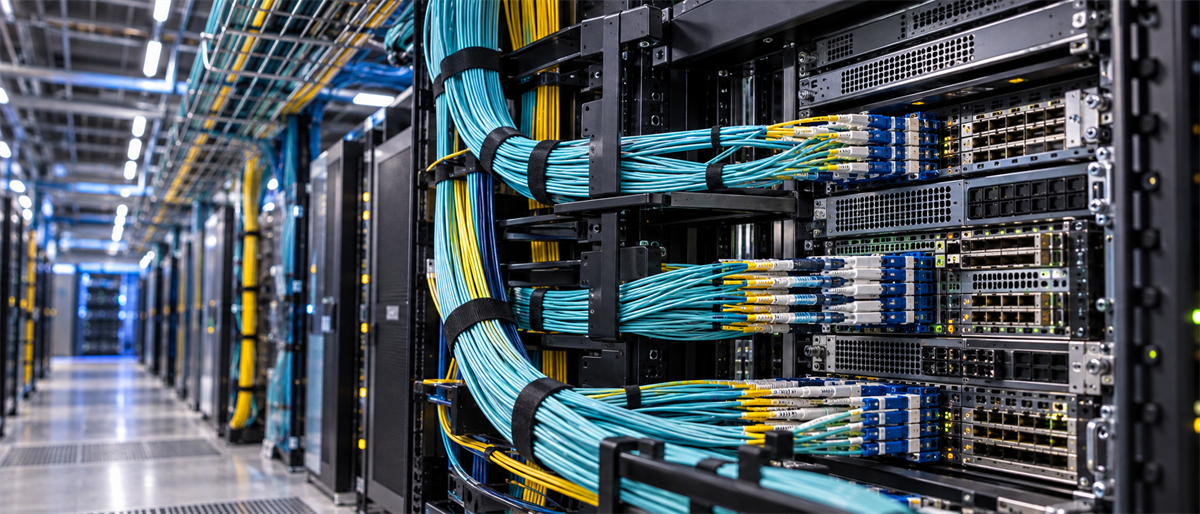
Key Points
- Corning and AT&T finalized a multi-year fiber supply deal worth more than $3 billion, reflecting rising demand for optical network infrastructure to support AI and cloud growth.
- Corning trades at a price-to-earnings ratio near 72 amid heavy insider selling and a planned $2 billion stock offering, raising valuation and dilution concerns despite strong revenue growth.
- AT&T is funding a costly network expansion to handle surging data usage, but it offers a lower valuation, a 4.46% dividend yield, and a well-covered payout ratio.
- Special Report: Why Bill Gates and BlackRock are watching this AI device
The artificial intelligence (AI) build-out has historically focused on the semiconductor sector, driving valuations to historic premiums as capital chased processing power. However, processing capabilities have limited utility without the physical infrastructure required to transmit staggering volumes of data. The optical communications supply chain represents the next essential phase of this investment cycle. Corning Incorporated (NYSE: GLW) and AT&T Inc. (NYSE: T) recently finalized a multi-year fiber supply agreement valued at more than $3 billion. This contract marks a transition from speculative hardware multiples to the tangible deployment of next-generation networks. As data consumption surges, securing the physical pathways for cloud and AI integration becomes paramount. Investors evaluating infrastructure plays can view these developments as a roadmap for where institutional capital may flow next. Moving Capital From Chips to Cables
Examining the transition from speculative semiconductor multiples to the tangible deployment of next-generation optical networks reveals a changing landscape. Corning operates as a critical supplier for telecommunications network expansion and hyperscaler data center infrastructure. AT&T's recent $3 billion commitment follows a similar multibillion-dollar fiber supply contract with Verizon (NYSE: VZ) and prior commitments, including a $6 billion agreement with Meta Platforms (NASDAQ: META) for data center optics. These supply agreements create a multiyear locked backlog, turning uncertain sector demand into highly visible forward revenue. With multiple major technology and telecommunications companies competing for optical fiber, Corning has consolidated a significant portion of the physical supply chain. The financial impact of this demand is already materializing in Corning's performance. During the second quarter of 2026, Corning reported a 17.1% year-over-year revenue increase to roughly $4.74 billion. Earnings per share came in at 78 cents, beating consensus estimates of 76 cents. Management projects an annualized sales run rate nearing $20 billion by the end of 2026, scaling toward roughly $40 billion by 2030. The AT&T deal allows Corning to maximize capacity utilization at its newly announced optical manufacturing plants in North Carolina and Texas. Higher utilization rates and fixed-cost absorption should directly support EBITDA margin expansion in the optical communications segment. Expanding margins would create a clearer path to sustained profitability as production scales. AT&T Foots the Bill for Faster NetworksThe underlying driver of this infrastructure deployment is escalating network demand. The average AT&T fiber household currently consumes more than one terabyte of data monthly, marking a roughly 500% increase since 2016. AT&T's internal projections indicate that household consumption could reach roughly 2.0 to 2.5 terabytes per month by 2030. Cloud computing, constant video streaming and the broad integration of enterprise artificial intelligence tools are accelerating this baseline usage. To support this data density, AT&T has mandated a network expansion to reach 60 million passings by 2030. The recent acquisition of Lumen's mass-market fiber business for approximately $5.75 billion requires substantial physical hardware integration to meet these targets. AT&T will absorb the upfront capital expenditures required for this expansion while securing the necessary fiber from Corning. During the second quarter of 2026, AT&T generated roughly $31.56 billion in revenue and reported earnings per share of 65 cents, beating consensus estimates of 59 cents. Carrying this infrastructure load affects the balance sheet. AT&T's net debt currently stands near 2.68 times EBITDA, slightly above its internal target of 2.5 times. Despite the debt load, AT&T trades at a price-to-earnings ratio near 8.4, paired with a price-to-earnings-growth ratio of approximately 1.26. AT&T maintains an annual dividend payout of $1.11 per share, yielding approximately 4.46%. The payout ratio stands at roughly 36.7% of earnings, suggesting that the dividend remains well covered even amid heavy capital deployment. Pricing in the Perfection of a Locked BacklogWhile Corning's fundamental business benefits from a substantial order book, the market has already priced in much of this optimism. Following a notable rally over the past year, Corning trades at a price-to-earnings ratio hovering around 72. This multiple matches or exceeds those of many pure-play semiconductor and AI hardware manufacturers. Forward metrics indicate expected earnings growth of approximately 30.5% year over year, which helps contextualize the premium. However, the valuation leaves little room for execution errors. Short interest sits at about 17.6 million shares, or roughly 2.1% of the float, reflecting a recent 12% decline as bears cover positions amid strong contract announcements. Corporate insiders at Corning have executed selling programs throughout the year, suggesting that leadership views the current share price as fully valued. Over the trailing 12-month period, insiders liquidated nearly $80 million in equity. Notable transactions include the chief operating officer selling 100,000 shares in June and an executive vice president selling 13,100 shares at an average price near $151.29 in August 2026. Compounding the valuation concerns, Corning filed an at-the-market equity distribution agreement with Goldman Sachs on Sept. 11, 2026, to sell up to $2 billion in new common stock. This filing introduces immediate dilution risk for existing shareholders. Companies often use at-the-market offerings to raise capital when they believe their stock commands a market premium. The cash influx will likely fund the manufacturing scale required for the AT&T and Meta contracts, but current investors would own a smaller share of future earnings. Finding the Margin of Safety in AI InfrastructurePhysical fiber deployment is an inescapable prerequisite for the next generation of digital infrastructure. The resulting capital expenditure boom strengthens Corning's order book and provides exceptional forward revenue visibility that most hardware manufacturers struggle to achieve. Telecommunications operators like AT&T must upgrade their networks to prevent service degradation and remain competitive, effectively guaranteeing a steady stream of purchase orders for fiber suppliers. Investors evaluating the artificial intelligence and broader connectivity themes face a clear divergence in risk profiles. The physical hardware supplier offers a high-growth, high-multiple entry point, along with established dilution risks and heavy insider selling. Conversely, the telecommunications operator absorbs the upfront deployment costs but offers a highly compressed valuation multiple and a steady dividend yield. Investors mapping out infrastructure exposure might consider how these distinct profiles fit within a broader portfolio allocation strategy, balancing the supplier's premium growth against the network operator's value-oriented cash flows.
If you no longer wish to receive these emails, unsubscribe here.
. |


No comments:
Post a Comment