
A Message From Chaikin Analytics
Dear Reader,
Marc Chaikin just issued a shocking new prediction about AI.
And we encourage anyone with money in the markets to pay very close attention.
Why? Chaikin is one of Wall Street's most respected investment minds.
His former clients have included billionaires like Steve Cohen, owner of the New York Mets...
D.E. Shaw, founder of one of the world's leading money-management firms...
And George Soros, founder of the Quantum Fund with Jim Rogers...
He pioneered computerized trading on Wall Street.
His Chaikin Money Flow indicator is built into every Bloomberg trading terminal on Earth.
He used his 20-factor Power Gauge system to predict:
- The Covid Crash of 2020
- The Stealth Bear of 2022
- The "Liberation Day" Plunge of 2025
- And countless other events going back 50-plus years
His system flashed bullish on Micron before it soared 970% in one year...
Celestica before it soared 6,600%...
And Nvidia before it skyrocketed more than 50,000%...
But he's calling his new prediction the biggest and most important of his career.
According to Chaikin, a $248 trillion "White Swan" event is about to disrupt AI.
It involves a radical new breakthrough in AI data centers.
This new technology uses 99% less electricity.
It uses 99% less water.
It uses 99% less space than current data centers.
Yet it's more than 1 trillion times more powerful when it comes to generating major scientific breakthroughs.
"If our research is correct, this will shorten discovery timelines from years to days or even hours," says the veteran analyst.
That means breakthroughs that would take 5 years with current AI tech will come in just 5 days – accelerating timelines by 360-fold.
One former IBM executive calls this new tech: "A scientific instrument for the ages."
And it could secure America's AI dominance over China for generations.
Which is why the White House is spending billions to expedite the launch right now.
Even better?
The company behind this breakthrough recently flashed "bullish" in Chaikin's system.
Now he says it could be the best AI investment for at least the next 5 years.
Chaikin reveals all the details for free here, in his brand-new presentation.
He even reveals the name and ticker of the company behind the coming breakthrough about halfway through the video.
But fair warning: This is very timely information.
Chaikin says he reserves the right to take it offline at any moment.
So don't wait. Click the link above to check it out while you still can.
Sincerely,
Vic Lederman
Publisher, Chaikin Analytics
P.S. We recommend checking out Marc's presentation right now. Drop whatever you're doing. When this company's new AI tech launches, his research shows it'll render all current AI tech virtually obsolete – instantly. How? By accelerating AI breakthrough times 360X. (Breakthroughs that were supposed to come in 5 years could come in 5 days.) The time to invest is now, he says. And he reveals the full story – and stock ticker – here, for free. Don't delay. This launch will happen before the end of this year.
This ad is sent on behalf of Chaikin Analytics, 201 King Of Prussia Rd., Suite 650, Radnor, PA 19087. If you would like to optout from receiving offers from Chaikin Analytics please click here.
Today's Bonus Content
Why Equinix and Digital Realty Benefit From Data Center Zoning Battles
Reported by Jeffrey Neal Johnson. Article Published: 11/15/2026.
Key Points
- Voters approved data center restrictions in 40 of 41 local ballot measures, yet Equinix and Digital Realty Trust gained after the election.
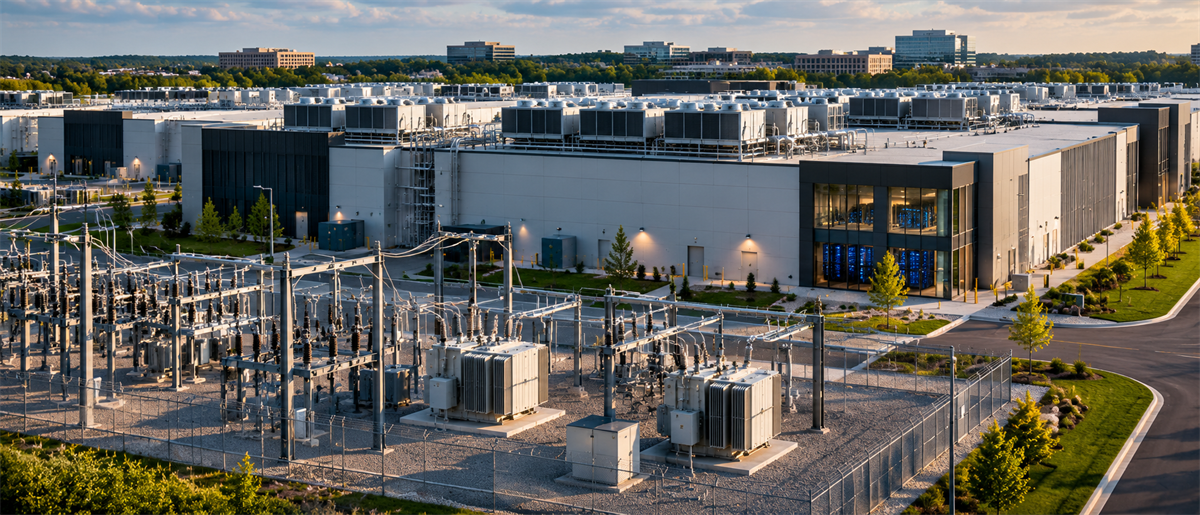
- Rising construction costs, permitting delays, and utility queues are creating a scarcity moat that boosts the value of existing, energized data center capacity.
- Digital Realty Trust and Equinix reported record third-quarter bookings and pricing power, though they show different valuations and growth timelines for investors to consider.
- Special Report: Noah’s Ark found?
During the recent election cycle, voters favored limits on data center development in 40 of 41 local ballot measures across 10 states. Concerns about strain on power grids and land use dominated the conversation, but established data center landlords initially outperformed other AI infrastructure stocks.
While some AI infrastructure stocks sold off in response to regulatory headwinds, a closer look at the underlying dynamics reveals a different story. Demand for artificial intelligence infrastructure and cloud computing remains intact. When local regulations restrict new construction, existing, fully energized supply can become substantially more valuable.
Investors evaluating the digital infrastructure space should consider how rising construction costs and permitting delays can create a protective moat around established operators. As supply bottlenecks form, pricing power can shift back to landlords with permitted properties.
Red Tape, Green Lights: How Zoning Fights Reward Incumbents
The November elections highlighted growing resistance to digital infrastructure development. Voters favored restrictions on data center projects in nearly all local ballot measures across 10 states, while newly elected leaders in key hubs such as Texas, Georgia, and Ohio signaled support for stricter grid oversight. The market reaction was uneven: Some AI infrastructure stocks declined sharply, while Equinix and Digital Realty gained immediately after the election.
The market appears to have priced in the risk of delayed pipelines and development bottlenecks. Unpermitted greenfield projects slated for 2028 and beyond face genuine regulatory hurdles and extended utility queues. These supply constraints increase the economic value of capacity that is already permitted, built, and connected to the electrical grid.
When local governments constrain new supply, incumbents with energized server halls gain leverage at the negotiating table. Companies that have already navigated zoning laws and secured utility power now operate assets with high scarcity value, insulating them from future competition.
From Rural Hubs to City Streets: The Urban AI Inference Pivot
Understanding these infrastructure dynamics requires looking at the primary customers. Major cloud providers continue to allocate capital to network expansion. Combined capital expenditures across the top three hyperscalers are expected to approach $600 billion in 2026, supported by a collective backlog nearing $1.8 trillion.
This demand translates directly into leasing momentum for Equinix (NASDAQ: EQIX) and Digital Realty Trust (NYSE: DLR). Both companies reported record third-quarter bookings, indicating that enterprise demand is outpacing localized development constraints.
A noticeable shift in workload requirements helps insulate these operators. While rural artificial intelligence training megacampuses attract the most regulatory scrutiny, enterprise customers increasingly need low-latency urban inference hubs to process data closer to end users.
Equinix operates retail facilities that typically span about 30 to 60 megawatts. This footprint sits comfortably below the 100-megawatt threshold that often triggers heavy state-level regulatory review. Equinix recently accelerated cabinet deliveries by about 40% to meet urban demand, while interconnection fabric revenue grew about 24%.
Digital Realty Trust is scaling its infrastructure to support high-density computing. It operates live liquid cooling across more than 25 locations and generated roughly 80% year-over-year growth in combined smaller-capacity and interconnection bookings.
Costly Construction: How Expensive Shells Lift Existing Value
Building a modern data center requires more capital today than it did just a few years ago. Significant equipment inflation affects every layer of the development process. Industry prices for essential components such as switchgear have climbed about 60%, while transformers and cooling systems cost roughly 30% more. In higher-cost markets, developing an AI-ready facility can exceed $20 million per megawatt.
As replacement costs rise, established operators can charge a premium for their existing space. Long-term leases in this sector feature built-in annual rent escalators, typically ranging from 2% to 4%, providing a compounding baseline for revenue growth.
More importantly, these landlords use contract structures that pass utility costs directly to tenants. Digital Realty Trust collected around $470 million in tenant reimbursements during the third quarter, helping offset volatile power costs.
Supply scarcity is driving visible mark-to-market pricing power. Digital Realty Trust posted cash renewal spreads near 11.8%, with large leases exceeding one megawatt commanding rate increases above 26%. Equinix is experiencing a similar dynamic, achieving pricing gains of roughly 12% on new contracts.
Valuation Divergence: Where the Digital Real Estate Deals Hide
Despite operating in the same sector, the companies have distinct valuation profiles, highlighted by recent market volatility. This offers investors different entry points for portfolio allocation.
Digital Realty Trust may present a value opportunity following the recent dip. Digital Realty Trust shares trade at around 21.8 times expected 2026 core funds from operations (FFO) and sit about 13% below their 52-week high. The company recently acquired a 9.9% stake in Australian operator NEXTDC through a joint venture with Goodman Group. Neither company currently plans to make a takeover offer, reducing immediate concerns about financing a larger acquisition.
Digital Realty Trust also secured more than $1.4 billion in private fund commitments and received a credit upgrade to Baa1 from Moody's. While the company secured a record $855 million in third-quarter bookings at 100% ownership, investors should account for the 17-month weighted-average lag between lease signing and rent commencement. Current leasing success will primarily drive cash flow expansion in 2027 and 2028, rather than in the quarters immediately ahead.
Equinix gained following the election even as other AI infrastructure stocks declined, reflecting its position as a high-margin interconnection compounder. Equinix stock trades at nearly 24.3 times expected 2026 adjusted funds from operations (AFFO). While the company expects total capital expenditures of $5 billion to $6 billion in 2026 and runs negative free cash flow, its operating cash generation remains strong.
Both companies face ongoing macroeconomic headwinds. With benchmark 10-year Treasury yields near 5%, the cost of debt remains elevated. Refinancing older debt creates some margin pressure. Equinix recently issued green bonds at a hedged rate of 4.82%, noticeably higher than the borrowing costs on much of its existing debt. Managing this cost of capital will determine how efficiently both companies can fund their expansion pipelines.
Wired for Wealth: 2 Ways to Play the Data Center Moat
The physical landscape of digital infrastructure is changing. Tougher permitting rules, extended utility grid queues, and rising electrical equipment costs are building a wall around new greenfield supply. This environment makes existing, power-connected footprints more valuable as cash-flow-generating assets.
Backed by record bookings and contractual utility pass-throughs, Digital Realty Trust offers a potentially discounted entry point for investors willing to wait for its development backlog to convert into recognized revenue. Equinix offers a premium approach, using its smaller urban footprint to capitalize on high-margin AI inference demand while potentially reducing exposure to the largest development projects facing regulatory scrutiny. Investors seeking exposure to the physical layer of the digital economy may find the current pricing landscape an opportunity to evaluate these foundational technology providers.
. |


No comments:
Post a Comment