 A Message From Porter & Company Something strange is happening to your money. It wasn't voted on. It wasn't debated in the Senate. And most Americans have no idea it's even taking place but… President Trump is replacing the U.S. dollar. Not with crypto. Not with a digital currency. Something far bigger than that – and it's already been signed and sealed in the back rooms of D.C., ready to be issued by the U.S. Treasury. Bypassing every legal and political channel under the guise of "national security," Trump has enacted this total money reset using a landmark executive order (14241). Whether you’re a Democrat or Republican, whether you support this new money or not, it doesn't matter. Soon, every U.S. citizen will be forced to use Trump's New Dollar to fill their gas tank, buy groceries, and pay medical bills. Which is why I've produced a critical new documentary laying out exactly what Trump's New Dollar means for your savings, your investments, and your family's financial future. Detailing three important steps you can take today to prepare – including the name of a core band of assets connected to Trump’s initiative that could surge as a result. As you’ll see in my briefing, the last time America reset its money like this – under Richard Nixon’s presidency in the 1970s – it created one of the greatest wealth divides in the history of our nation. On one side, it minted an average of 1,300 new millionaires a day for over half a century. And on the other… the folks left behind, drowning in debt, with no idea how to use America’s new money to create wealth. As Trump rolls out his new dollar, the question is: Which side will you be on? 
Good investing,
Porter Stansberry PS. If you’re wondering what Trump’s new money will look like, when it will be issued, what it means for your investments – all of those questions are answered in my briefing.
Just For You
Why Wall Street Expects Even More From SanDisk After Its 575% RallyReported by Sam Quirke. Article Posted: 10/11/2026. 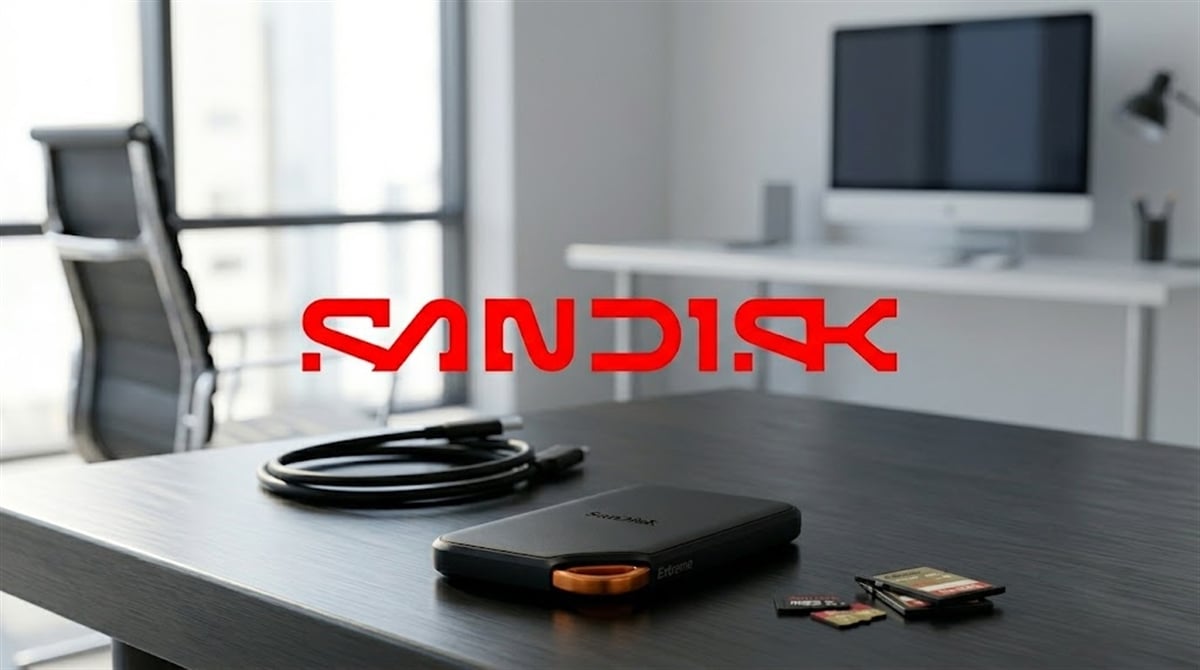
Key Points
- SanDisk shares have surged 575% in 2026, and multiple analysts, including Mizuho, Rosenblatt and Arete Research, have recently raised their price targets further.
- Wall Street's optimism stems from durable AI-driven demand for data-center storage, longer-term supply contracts, and more disciplined capacity expansion across the memory industry.
- Risks remain, including reliance on consumer gadget sales, potential oversupply from rivals, and the possibility that earnings are nearing a cyclical peak ahead of this month's report.
- Special Report: Green, red, gold
Few stocks have had a year quite like SanDisk Corporation (NASDAQ: SNDK). The memory-chip maker has surged a remarkable 575% so far in 2026, turning a once almost unheard-of name into one of the market's standout performers. After a brutal summer correction, its shares now trade around $1,600, up nearly 60% from their July low in a steady march of higher highs. A move of that size would normally have investors considering whether to take some profits, concerned that the easy money has long since been made.
Yet Wall Street appears to be doing the opposite. Over the past fortnight—and, indeed, the past few months—a string of analysts have raised their price targets, betting that even after this spectacular climb, SanDisk has further to run. So what has the market so excited about a company making something as unglamorous as flash memory? And with earnings due at the end of the month, could the final stretch of the year deliver yet another leg higher? The Analysts Are Piling InThe recent run of bullish calls is hard to ignore. Just this week, Mizuho lifted its price target to $2,050 from $1,875, pointing to surging demand for memory tied to agentic AI. That followed a flurry of even more ambitious targets in recent weeks, including a $2,400 call from Rosenblatt at the end of last month and an eye-catching $3,000 target from Arete Research back in August. From the stock's current trading level, the latter implies upside of nearly 90%. The bull case is no longer centered on the boom-and-bust cycles that have long defined the memory industry, but on a new and potentially far more durable source of demand. That demand is being driven by the way AI is now used. As the focus shifts from training models to running them at scale, the systems doing the work need vast amounts of fast, high-capacity storage to hold the data they draw on. It is a less visible part of the AI build-out than chips, but a growing one, and SanDisk sits squarely within it. Why This Boom May LastThe bull case is that SanDisk is becoming less dependent on the volatile spot market for memory chips. Increasingly, it is locking in customers through longer-term contracts that guarantee both volumes and a price floor, giving it visibility into future revenue that the industry has rarely enjoyed. Just as important is the shift in who its customers are. A growing share of its business now comes from data centers rather than the fickle phone and laptop markets, and that enterprise demand tends to be far more dependable. The company has been deliberately steering production toward these higher-value, AI-driven applications. There is a supply angle, too. Rather than flooding the market with new capacity, as memory makers have done in the past, SanDisk has been expanding output more carefully. If the industry as a whole shows similar discipline, pricing could remain healthier for longer, helping avoid the gluts that have historically ended rallies. A Word of CautionFor all the enthusiasm, however, this is still the memory business, and a hint of caution is warranted. The central concern is timing, with bears arguing that SanDisk's earnings may be near a cyclical peak. In other words, buying now risks paying up just as the cycle is preparing to turn. Even the stock's comparatively low valuation could prove expensive if it is applied to profits that begin to fade. The other risks are not hard to spot. A meaningful share of SanDisk's sales still depends on consumer gadgets, where demand could weaken. At the same time, fresh capacity from rivals, including fast-growing Chinese manufacturers, could revive the oversupply that has haunted the sector in the past. The contracts help, but they do not make the company immune. That makes the company's earnings report later this month all the more important. After a rally this large, a simple beat may not be enough; investors will be looking for reassurance on pricing, contract coverage, and whether management believes its fat margins are built to last. A Rally With Room to RunWeighing it all up, SanDisk still makes for a compelling way to play the AI storage boom. The combination of buoyant demand, improving contract visibility, and a growing data-center business has convinced much of Wall Street that its transformation is real—and that the shares can climb further despite their stunning ascent. The cyclical risks are real, and anyone buying after a 575% run should do so with eyes open. But with analysts lining up behind ever-higher targets and a potential catalyst just weeks away, momentum remains firmly with the bulls. For investors who believe AI's hunger for storage is only beginning, SanDisk's extraordinary year may still have another chapter left to write. . |


No comments:
Post a Comment