 A Message From Banyan Hill Publishing Dear Reader, I hesitated to even send you this. After what I heard… After who told me… On January 7th… just outside Washington, D.C… I sat across from a man whose family has been tied to global power for decades. Oil deals. Intelligence circles. Government insiders. He leaned in and told me something that changed everything I thought I knew about the Iran war. What you’re seeing on the news? It’s not the real story. Not even close. The strikes… the chaos… the escalation… It’s all part of something much bigger. A global deal worth trillions. And the only reason I know this is because of him — an anonymous contact who risked everything to pass this information along. I verified it. Cross-checked it. Dug deeper. And what I uncovered is something every American investor needs to see immediately. Click here to see the full breakdown before it’s too late. It’s a coordinated move that could reshape the global economy for decades. But you need to see it for yourself. Go here now and uncover the real reason behind the Iran war. Regards, 
Addison Wiggin Founder, Grey Swan Investment Fraternity
Exclusive Article
4 Stocks That Could Split Next—and Why Investors Are WatchingSubmitted by Thomas Hughes. First Published: 9/30/2026. 
Key Points
- AutoZone, Eli Lilly, Meta Platforms, and Costco all trade at high share prices and appear overdue for stock splits.
- Each company shows strong underlying fundamentals, including buybacks, GLP-1 growth, AI innovation, and warehouse expansion, supporting continued price gains.
- Analysts have raised price targets and coverage for these stocks, reflecting confidence even as speculation about splits persists.
- Special Report: The Rumors About Elon’s Next Move Are Spreading Fast
Stock splits don't change a company's fundamentals or value, but they can benefit investors and ultimately support equity gains. At face value, a stock split signals underlying company strength: The stock has climbed to “unreasonably” high price levels and is expected to continue rising, as only fundamentally strong companies typically reach those valuations. Digging deeper, stock splits increase affordability, even if only psychologically, opening shares to a wider audience, particularly retail traders, who drive much of the day-to-day price action. Most importantly, companies that split their stock signal management's confidence in future results and often continue trending higher because their fundamental drivers remain intact. AutoZone’s Buybacks and High Share Price Strengthen the Split Case
AutoZone (NYSE: AZO) is on track for a historic split, with its share price trading above $2,800, making it one of the most expensive stocks on the market. AutoZone also hasn't split its stock in more than three decades, while competitors such as O’Reilly Automotive (NASDAQ: ORLY) have taken a different approach. O'Reilly completed a 15-for-1 split in 2025. Key stock drivers include a steadily growing store count, persistent comparable-store sales growth, and the cash flow it generates, which allows AutoZone to remain committed to aggressive share buybacks. Buybacks are the driver, no pun intended. AutoZone faces hurdles, as do all retailers, but its market position and industry dynamics—including trends that keep drivers in their vehicles longer each year—support healthy cash flow. The company allocates capital strategically, reinvesting in growth, maintaining balance sheet health, and using the remainder to repurchase shares. Buybacks are significant, reducing the share count by 2.2% year over year in fiscal 2026, a pace that could continue under its existing repurchase authorization. 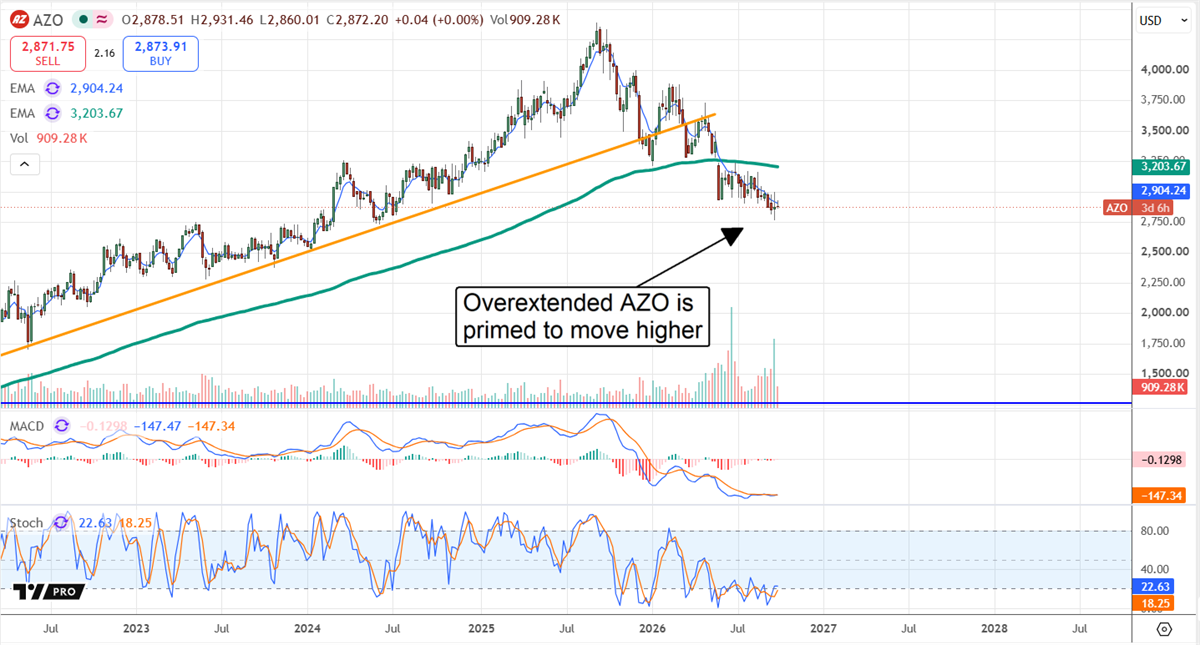
Eli Lilly’s Growth Story Makes a Stock Split Easier to ImagineEli Lilly (NYSE: LLY) is another potential split candidate. Surging GLP-1 revenue and a strong product pipeline have kept its stock price consistently above $900, and its buyback authorization could provide additional support. Like AutoZone, Eli Lilly hasn't split its shares in decades—not since 1997—while many of its competitors have done so. Novo Nordisk (NYSE: NVO), notably, ushered in the GLP-1 craze and is among those that have split, doubling its share count in 2023, just after the craze reached its crescendo. Analysts' trends align with an outlook for higher share prices, even if they do not point to a split. The group is increasing coverage, firming sentiment, and raising price targets, with the consensus up about 40% year over year (YOY) and the high end pegged at $1,600. The consensus alone is enough to set a new all-time high and extend the stock's uptrend, while the high end suggests another 35% upside remains. Looking ahead, analyst sentiment could strengthen as LLY's pipeline includes advanced GLP-1 products with the potential to outperform its already industry-leading treatments. 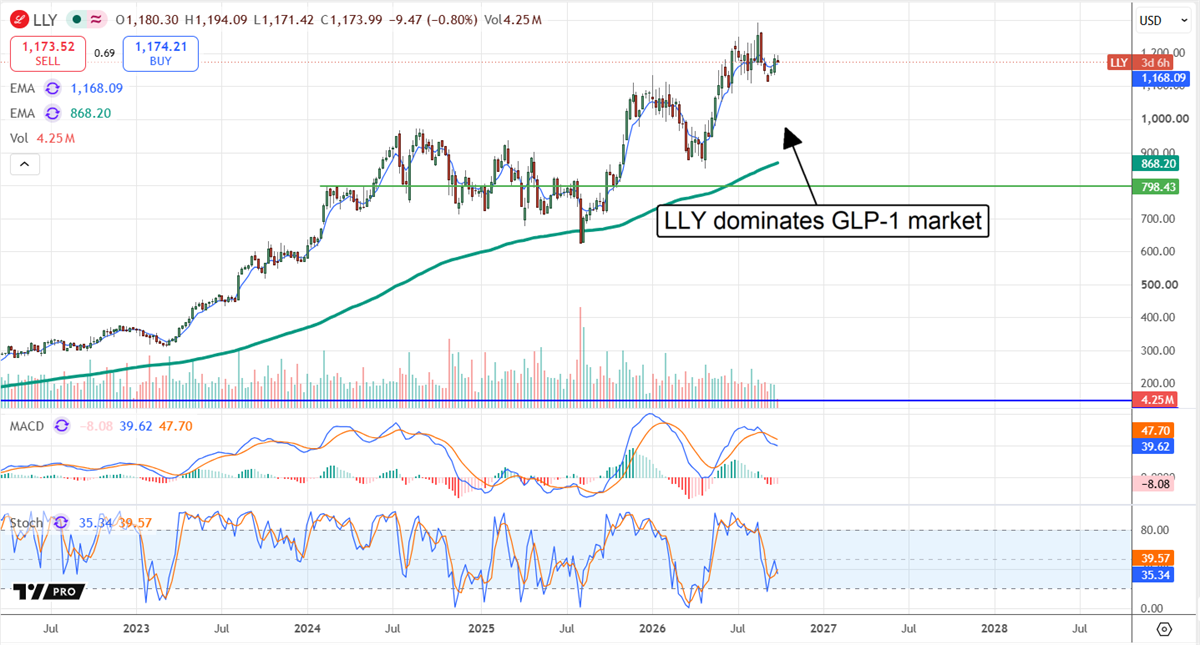
Meta Remains the Magnificent Seven’s Stock-Split HoldoutMeta Platforms (NASDAQ: META) stock surged in September, confirming its uptrend and suggesting the potential for further gains. The move pushed the share price above $700 and strengthened the stock-split case, with expectations for higher prices ahead. A recent catalyst has been Muse AI, an agentic assistant that moves beyond chat-based assistance to provide practical help. It runs in the background on a virtual machine and accomplishes tasks while users are offline. Other factors adding to the suspense include Meta's Magnificent Seven (Mag 7) status and the fact that it remains the only Mag 7 stock that has never undergone a split. However, CFO Susan Li said at Meta's May shareholder meeting that the company did not presently plan to initiate a stock split. Analysts are responding as well. MarketBeat tracks numerous September upgrades and price-target revisions, reversing an earlier cooling trend and pushing price action back toward the high end of the range. The question is whether Meta can capitalize on and monetize the technology, and early adoption is encouraging. Muse reached No. 1 on Apple's (NASDAQ: AAPL) App Store and Google Play, operated by Alphabet (NASDAQ: GOOGL), giving Meta early evidence of consumer traction. 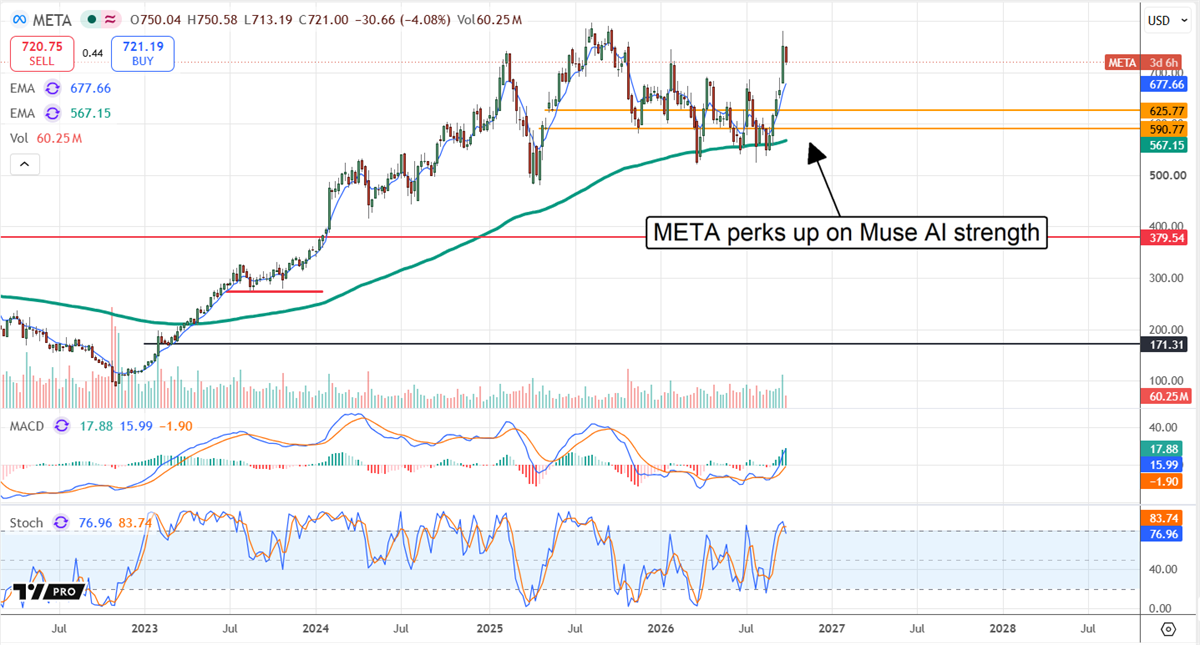
Costco’s Split Case Builds Alongside Special-Dividend SpeculationCostco (NASDAQ: COST) has a history of splits, but it's been more than 25 years since the last one. Since then, the share price has climbed above $900, while the current analyst consensus target is near $1,000. Over the past two years, the stock has consolidated, allowing the long-term 150-week exponential moving average to catch up with the price. The moving average now provides support and has recently helped define the lower end of the stock's trading range. Costco could also be in a position for another special dividend, but that remains speculative. This year's catalysts include warehouse expansion, digital initiatives, and international markets. The company targets at least 30 new warehouse openings per year, focusing on higher-growth international markets with solid renewal rates while using digital tools to improve internal, customer-facing, and supply chain operations. Analysts moderated their targets earlier this year but remain confident in the consensus, with the current consensus price target near $1,046, implying roughly 13% upside from late-September levels. 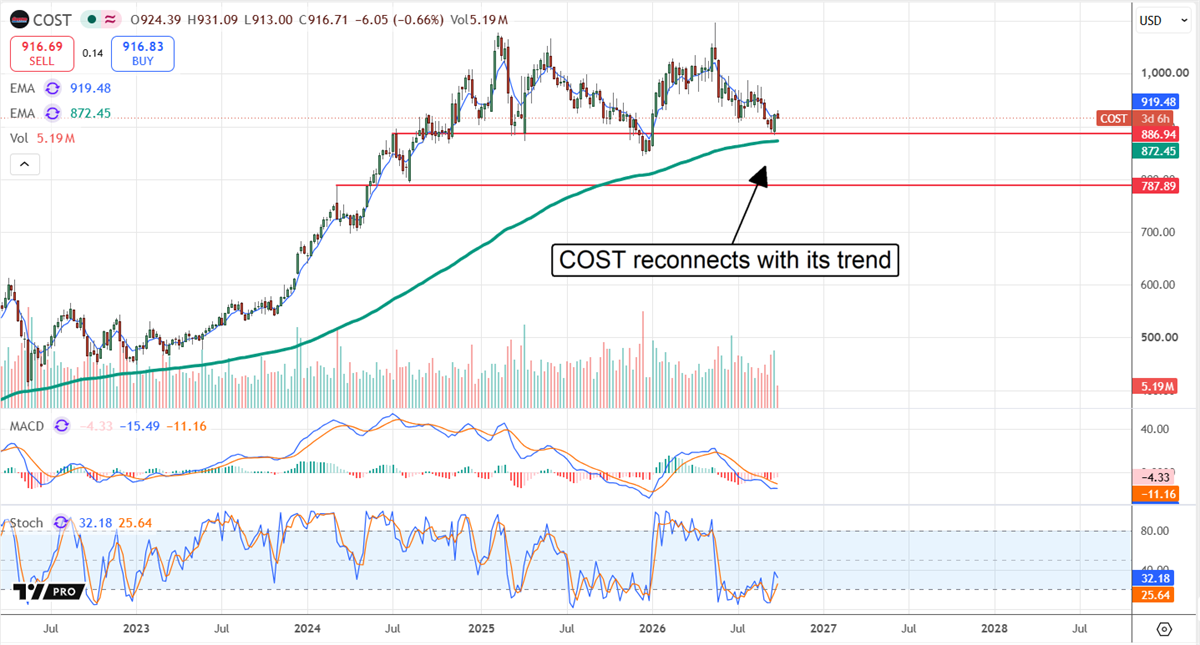
This ad is sent on behalf of Banyan Hill Publishing.
This ad is sent on behalf of Banyan Hill Publishing.
. |


No comments:
Post a Comment