 A Message From Paradigm Press Below is an important message from one of our highly valued sponsors. Please read it carefully as they have some special information to share with you.
Man who Predicted Trump 2016 Win:
“Prepare for Mid-Term Meltdown” Dear Reader, In 2016, one major election model gave Hillary Clinton more than a 99% chance of winning right up until election night. But right before the election… Former advisor to the CIA, the Pentagon and the White House Jim Rickards went on multiple TV news programs… And predicted Trump would win. What he’s predicting now is even more shocking. Click here to see it because it’s a BOMBSHELL… And it could soon send shockwaves through the financial markets. Regards, Matt Insley
Publisher, Paradigm Press
Exclusive Content
How a Hurricane Could Help Some Refineries—and Hurt OthersAuthor: Nathan Reiff. Published: 10/14/2026. 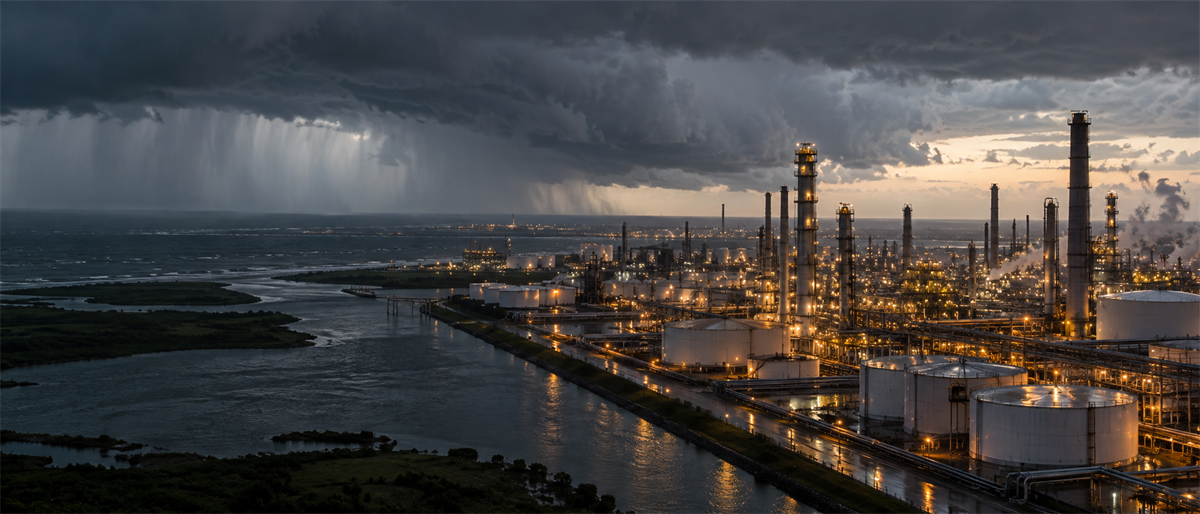
Key Points
- Hurricane Isaias showed that storm impacts on energy stocks depend on asset location, revenue diversification, and exposure to widening crack spreads.
- Chevron shares rose about 4% in the past month after Isaias proved less damaging than feared, while diversified Phillips 66 gained 14%.
- The VanEck Oil Refiners ETF, up roughly 80% year to date, benefits from global diversification and tighter refined markets caused by Gulf Coast disruptions.
- Special Report: Do NOT Buy SpaceX – Do This Instead
Hurricane season in the United States can be a major driver of volatility in the energy sector, although investors often overlook the nuances that can leave some companies heavily affected while others are barely scathed. When storms threaten the Gulf Coast, they can cause refinery closures, production disruptions, infrastructure damage and resulting increases in prices at the pump. Early October's Hurricane Isaias recently demonstrated how difficult it can be to predict the impact of these events. While forecasts initially called for Isaias to affect a wide area of Gulf Coast refineries, the projected amount of impacted refinery capacity shrank considerably as landfall approached. For investors, the disruption to energy companies in the area may ultimately have been less than expected, but the episode still offers lessons on how to identify opportunities. The impact of a hurricane on any specific company tends to come down to where its assets are located, how diversified its revenue streams are and whether it can capture the widening crack spread that often follows a reduction in refining capacity. Isaias Didn't Need to Destroy Refineries to Disrupt the Market
As Isaias demonstrated, even when a hurricane causes less damage than initially anticipated, it can still create turbulence in the energy market. Companies may choose to reduce production or even shut down portions of their businesses preemptively. Investors were watching facilities such as Chevron's (NYSE: CVX) in Mississippi, a major domestic refinery that faced potential flooding or outages as a result of the storm. While CVX shares remained flat from late September through Oct. 7, they quickly climbed as it became clear that Isaias would likely cause less damage than originally expected. CVX is up about 4% over the last month. By contrast, shares of rival Phillips 66 (NYSE: PSX) have risen 14% over the last month, reflecting investor optimism about a company that was less likely to be affected by Isaias from the outset. Phillips 66 is a nuanced play in a scenario involving a Gulf Coast hurricane, given its diversified business lines. The company has refining, midstream, chemical and other businesses, some of which are significantly more exposed to hurricane-related risks than others. While PSX shares are up an impressive 125% year to date (YTD), this performance largely reflects the crack spread expansion that has benefited refiners broadly amid the ongoing Iran conflict, rather than a specific response to Isaias or other weather events. Phillips 66's midstream business is critical because it provides cash flow based primarily on fees rather than the price of crude, which may make PSX more stable during future hurricanes. Chevron's Crude Production Could Be Interrupted, But at What Cost?In addition to Chevron's Mississippi assets, the company's deepwater Gulf of Mexico operations face the risk of temporary shutdowns during severe storms in the area. This could affect not only the company's refining operations but also its crude production volumes. Still, with crude as costly as it is, the impact of a brief production interruption on the company's revenue is less damaging. Indeed, a crude price spike following a hurricane, as occurred during Isaias, can help offset that damage further. CRAK Benefits From Three Distinct TailwindsThe VanEck Oil Refiners ETF (NYSEARCA: CRAK) is an exchange-traded fund (ETF) that holds a basket of global oil refiner stocks, with domestic names making up just 35% of the portfolio. Even if those stocks are affected by a North American hurricane, the bulk of the portfolio should remain unaffected. At the same time, virtually all of the companies in CRAK's portfolio could benefit from a tighter global refined-products market caused by a disruption along the U.S. Gulf Coast. Potential setbacks for domestic refiners may therefore benefit their international rivals. CRAK's net assets have surged dramatically this year as investors have capitalized on wide crack spreads and rapid share-price increases among refiners. The fund has year-to-date returns of about 80%, making its relatively high expense ratio of 0.61% more tolerable. Not all of the current tailwinds—including limited supply due to the Iran war, elevated crack spreads and reduced Gulf Coast capacity—are likely to continue over the long term. Crack spreads tend to normalize within a few weeks of a U.S. hurricane, so investors new to CRAK should keep in mind that they may be buying after the Iran war has already delivered significant returns and as hurricane season nears its end for the year. . |


No comments:
Post a Comment