 A Message From Profits Run If you still haven't downloaded my "Safe Trade Options Formula" book... ...please take a few seconds and download it right now before your new temporary download link expires. I eventually plan to charge for this book, so do yourself a favor and download it now... That way, no matter how much it is in the future, you'll have a copy on your computer already. Make sense? FREE: Safe Trade Options Formula << Download Now Good Trading,
Bill Poulos p.s. Go here to save a copy of my "Safe Trade Options Formula" book to your computer before I start charging for it.
Further Reading from MarketBeat
Luxury's Middle Market Is Cracking—These 3 Stocks Could WinWritten by Chris Markoch. Publication Date: 10/19/2026. 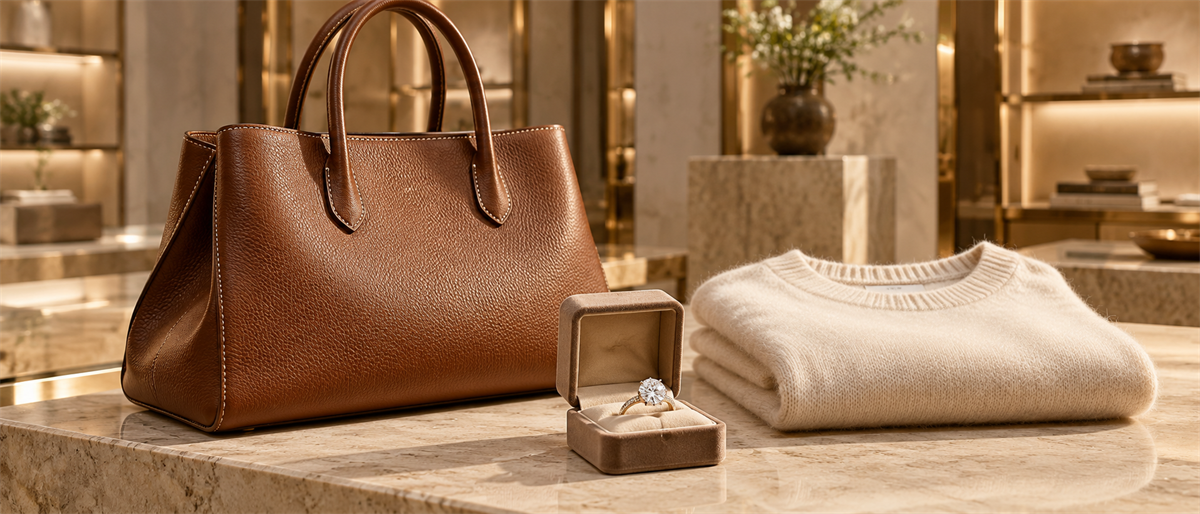
Key Points
- LVMH reported falling third-quarter sales in mainland China and its fashion division, raising concerns about weakness spreading across the luxury sector.
- Analysts suggest the slump reflects brand relevance and overdistribution issues rather than a simple China problem, since rivals like Ralph Lauren and Hermès grew there.
- Ralph Lauren, Tapestry's Coach brand and Signet Jewelers are highlighted as U.S.-listed stocks positioned to benefit from shifting luxury consumer preferences.
- Special Report: The Iran War Isn’t Chaos. It’s Strategy.
For two years, China has been the biggest obstacle for luxury stocks. On Oct. 12, LVMH Moet Hennessy Louis Vuitton (OTCMKTS: LVMUY) made it clear that the obstacle remains. The world's largest luxury group said sales in mainland China fell by double digits in the third quarter. Chinese shoppers also pulled back while traveling abroad. Organic sales in Asia excluding Japan fell 5%, making it the only major geographic region to report a decline. Sales grew in the United States, Europe and Japan.
The damage landed hardest on the company's crown jewel. Organic sales in the fashion and leather goods division, home to Louis Vuitton and Dior, fell 5%. Analysts expected a decline of about 1.6%. Just one quarter earlier, the division posted its first organic gain in two years. LVMH is the industry's bellwether, which is why this report isn't just a single-company story. Kering (OTCMKTS: PPRUY), owner of Gucci and Yves Saint Laurent, and Hermès (OTCMKTS: HESAY) report later this month. Investors will now be watching for signs that the weakness is spreading. The market wants to read this as a China story, but that may be too simplistic. It's a relevance story. Luxury shoppers haven't stopped spending. They're becoming more selective about which brands deserve their money. That shift could favor three U.S.-listed stocks over some of Europe's biggest luxury names. China Is the Headline, Not the DiagnosisBlaming China is convenient. It's the biggest growth market, and the headwinds are real. LVMH's CFO cited a sharp drop in Chinese consumer sentiment. A tax crackdown on wealthy individuals hasn't helped. But Louis Vuitton also has a self-inflicted wound. The brand faced a consumer backlash after a trademark dispute with local tea chain Molly Tea. Many shoppers saw the floral motif at issue as a traditional Chinese design, not a French logo. Meanwhile, other brands are growing in China. Ralph Lauren (NYSE: RL) reported China sales growth of more than 40% in its most recent quarter. Hermès grew in China earlier this year while LVMH's fashion unit did not. Same consumers, same economy, different results. The Hourglass and the Missing MiddleAccording to "The Silent Luxury," today's market resembles an hourglass. Demand is pooling at the top, where houses like Hermès ration supply. It's holding at the accessible end, too. The squeeze is in the middle, where brands are too visible to feel exclusive and too expensive for aspirational buyers. The numbers back it up. Bain estimates that the global luxury customer base shrank from about 400 million in 2022 to roughly 330 million to 340 million. Much of the industry's recent growth came from price hikes, not volume. Overdistribution made matters worse. When Louis Vuitton is in every airport, the logo stops signaling anything special. Rapid product drops shorten the shelf life of desire. That's a fundamentals problem dressed up as a macroeconomic problem. For U.S. investors, the opportunity may be in companies that have avoided the excesses of traditional European luxury. Ralph Lauren is winning with a consistent, timeless identity. Tapestry (NYSE: TPR) is attracting younger consumers through its Coach brand, which offers quality without European luxury prices. And Signet Jewelers (NYSE: SIG) offers exposure to jewelry, a category where lasting value matters more than seasonal trends. These companies aren't interchangeable, but each offers a different way to invest in the same shift: Consumers increasingly want a reason to justify what they're spending. Selling the Wardrobe, Not the CollectionRalph Lauren has spent years cutting back on discounting to elevate the brand. That strategy is paying off. In the company's first-quarter earnings report for fiscal 2027 (FY2027), revenue rose 14%, and gross margin reached 73.7%. Asia revenue jumped 24%. The company fits a key theme from the Silent Luxury analysis: timelessness beats novelty. Ralph Lauren sells a consistent aesthetic, not a rotating cast of creative directors. Management raised full-year guidance to 5% to 6% constant-currency growth. Investors will hear more when the company is expected to report earnings on Nov. 5. Winning the Customers Europe Priced OutHere's the contrarian angle. If European houses abandoned the aspirational middle, someone was going to scoop it up. That someone is Tapestry through its Coach brand. Coach revenue grew 23% in FY2026, with double-digit growth every quarter. Tapestry added about 11 million new customers, roughly 35% of whom were from Gen Z. Coach also pushed through midteens handbag price increases without losing volume. That's pricing power earned through value, not scarcity. Kate Spade remains a drag, with revenue down 10% last year. Still, Tapestry guides for low-double-digit earnings-per-share (EPS) growth in fiscal 2027 and plans $1.35 billion in buybacks. Jewelry Doesn't Go Out of SeasonThe Silent Luxury argues that jewelry is outperforming fashion because its value is intrinsic. A ring doesn't need a new campaign to stay relevant. LVMH's own report supports that view. Watches and jewelry grew 6% organically while fashion fell 5%. Signet Jewelers, the largest U.S. specialty jewelry retailer, offers direct exposure to that shift. Same-store sales rose 2.2% last quarter, and average unit retail rose about 6%. Adjusted EPS climbed 36% to $2.19, and the company raised full-year guidance. Signet isn't a high-end atelier. But it rides the same category tailwind without heavy China exposure. The Winners and Losers in Luxury Are Becoming ClearLVMH's report will likely set the tone for Kering and Hermès. If investors treat it purely as a China problem, they may miss the bigger shift. Luxury buyers are rewarding brands that deliver durable value. They're punishing those that diluted their mystique through overexposure. For investors, the opportunity isn't necessarily in luxury's biggest names. It's in companies that are giving increasingly selective consumers a reason to keep spending. Ralph Lauren, Tapestry and Signet each approach that challenge differently, but their recent results suggest they're getting something right that some traditional luxury brands aren't. . |


No comments:
Post a Comment