 A Message From Golden Portfolio Look at what's happened to these seven gold miners: MAG Silver — up 56.6%
Reunion Gold — up 71.9%
Calibre Mining — up 107.7%
Probe Gold — up 166.7%
Rupert Resources — up 177.9%
Loncor Gold — up 181.8%
G2 Goldfields — up 1,228.6% These weren't lucky picks or lottery tickets. Every one of them moved for the same reason — and it's a reason you can see coming. Go here to see the pattern behind all seven. Each of these was a small gold miner sitting on assets a major wanted. And one by one, the majors came and bought them. Now here's the part that matters: all seven were in my portfolio before the buyouts happened. Not seven picks out of hundreds. Seven names, all held ahead of the acquisition — because the same signal flagged every one of them. Once you understand what the majors are forced to do, spotting the next target stops being luck and starts being pattern recognition. Here's why that pattern isn't slowing down — it's accelerating. The major gold miners have a problem. Their own production is shrinking. Every ounce Barrick or Newmont pulls out of the ground makes their remaining mine worth a little less — a gold mine is a shrinking asset in slow motion. At the same time, the majors are sitting on the most cash they've ever held, thanks to today's gold prices. So a major has exactly two options: watch its output shrink until it's out of business… or use that record cash to buy the best small miners and replace what it's losing. That's not a choice. It's survival. Which means the buyouts don't stop — they keep coming, one after another, until the best small assets are gone. And here's what that looks like from the outside, if you own one of those small miners before the major comes knocking: You go to bed owning a small gold company. Overnight, a major announces it's buying that company — at a premium. You wake up, and your shares are worth 40%… 67%… even 79% more than when you closed your laptop the night before. No chart to watch. No trade to time. The value reprices instantly, while you sleep. That's already happened to all seven companies above — every one of them in my portfolio before it did. The only question left is which small miners are next — the ones with the grade, the cash flow, and the assets the big players actually need. My name is Garrett Goggin, CFA, CMT. My readers had the chance to hold all seven of those names before the majors bought them — and it's why Porter Stansberry recently called me: "THE most knowledgeable gold investor in the world." Go here to see the three names I believe are next in line to get bought. Best, Garrett Goggin, CFA, CMT
Lead Analyst and Founder, Golden Portfolio
Bonus Content from MarketBeat Media
These 4 Companies Are Monetizing AI TodayBy Thomas Hughes. Published: 9/23/2026. 
Key Points
- NVIDIA, Microsoft, Alphabet, and Palantir each successfully monetize AI through distinct strategies, protected by moats that safeguard future cash flow.
- NVIDIA leads through AI hardware and software sales, generating substantial cash flow that supports dividends, buybacks, and continued investment in future technology.
- Microsoft, Alphabet, and Palantir monetize AI via embedded cloud services, advertising strength, and safe orchestration for enterprises and governments, respectively.
- Special Report: Analyst nicknamed “The Prophet” issues new warning for America
Monetizing AI matters for many reasons, including recapturing hundreds of billions of dollars in infrastructure spending, advancing the technology and, of course, generating profits. The challenge is that AI monetization requires a delicate balance between upfront costs, ongoing research and adoption—and adoption may be the greatest risk of all. While upfront research costs are enormous, they can be mitigated if users embrace the technology. The risk lies in driving usage too far, too quickly and undermining confidence in AI’s capacity and capabilities. Companies monetizing AI today share several qualities, including proven utility for consumers and the ability to innovate within their respective markets. More importantly, each has a moat that helps protect future cash flow. No Company Monetizes AI Like NVIDIA
NVIDIA (NASDAQ: NVDA) is the clear leader in AI monetization, providing both the hardware and the full-stack software needed to run it. Hardware is the primary source of revenue, including GPUs and the networking equipment that connects them into clusters. It drives most of the company’s revenue and earnings, but other avenues include royalties, revenue sharing and investments in future technologies. Royalties and revenue sharing are linked to neoclouds and startups that provide third-party services using NVIDIA technology. Investments in future technologies create a virtuous cycle, keeping NVIDIA ahead of the curve while helping its GPU customers maintain access to capital. The impact on NVIDIA’s cash flow is substantial and reflected in its balance sheet. Its cash pile has grown over the past few years and remained high at more than $50.5 billion as of Q2, despite aggressive investments. This enables a modest dividend, dividend increases and share buybacks, which incrementally reduce the share count. Looking ahead, NVIDIA is likely to continue generating strong cash flow and sustaining capital returns over time. 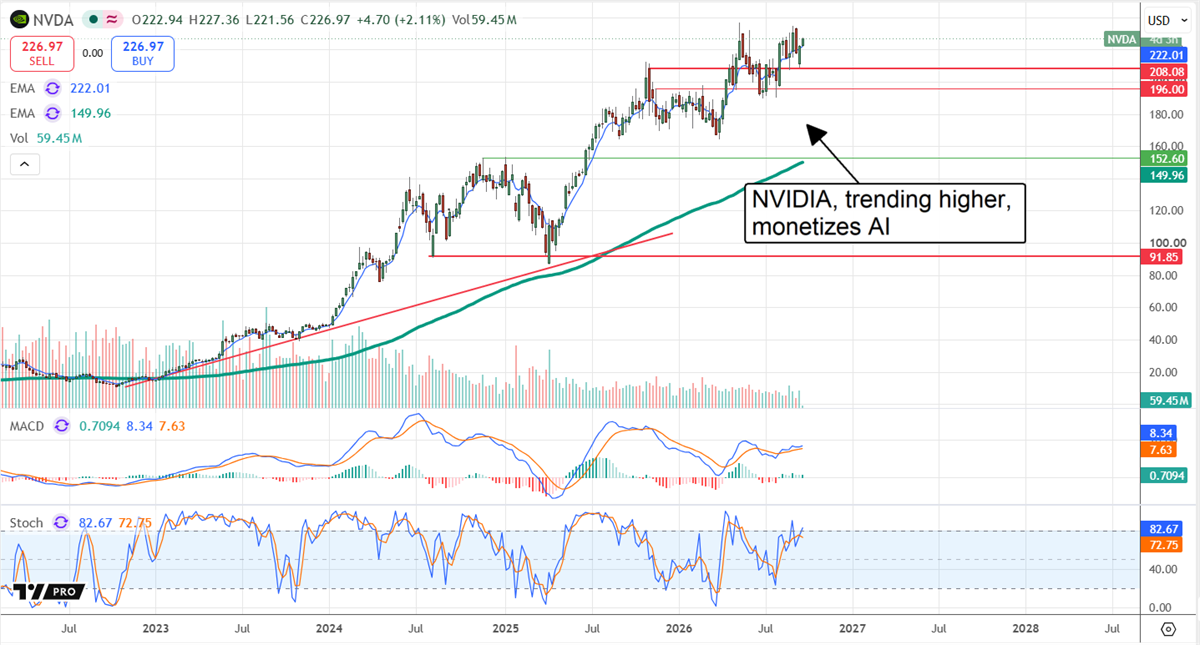
Microsoft Leads With Embedded ServicesWhile it garners less attention than other AI companies, Microsoft (NASDAQ: MSFT) leads in monetizing AI applications. The company is embedding AI throughout its ecosystem, using it both as an incentive and as an upsell to drive business. Recent earnings results included outperformance, accelerating growth in the cloud segments and strength in Azure, the cloud infrastructure business, which generated more than $100 billion in annual revenue for the first time. Looking ahead, analysts forecast that Microsoft will sustain modest single-digit growth and steadily widen its margins over the next five to 10 years. Like NVIDIA, Microsoft uses its cash flow to maintain financial health, reinvest in new technology and return capital to shareholders. It also pays a modest, albeit slightly larger, dividend while incrementally reducing its share count. Forty-seven analysts rate MSFT as a Moderate Buy, with approximately 15% upside as of late September, compared with NVIDIA’s Buy rating and 40% upside potential. 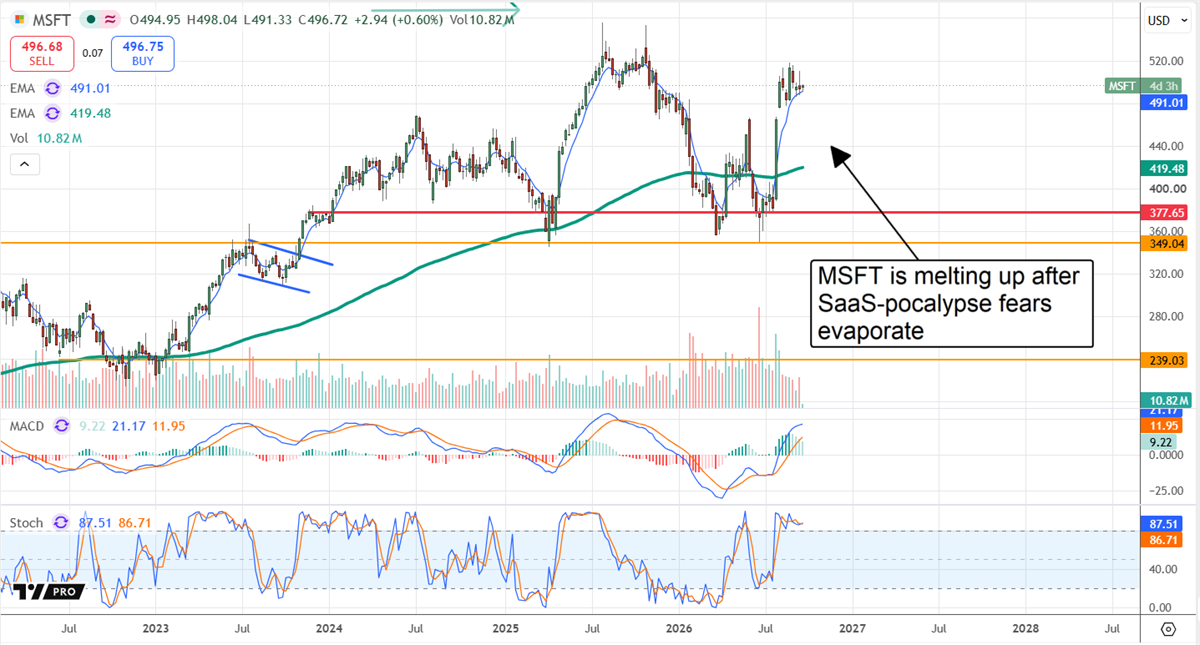
Alphabet Taps Consumers to Monetize AIAlphabet (NASDAQ: GOOGL) monetizes AI in several ways, including through software, infrastructure and services, but its primary driver remains the advertising business. AI increases clicks and improves ad quality, which, in turn, is reflected in the company’s results. First-half 2026 results included the sixth and seventh consecutive quarters of accelerating revenue growth, outperformance and strong guidance, with Q2 revenue up nearly 25% year over year. The Services segment, which accounts for about 90% of the business, underpins those results and is supported by strength in Cloud. Google Cloud grew more than 80%, driven by strength across all business lines. Alphabet, too, pays a modest dividend and incrementally reduces its share count. A healthy balance sheet, low and manageable debt and relatively unimpeded cash flow offset its limited shareholder returns. These factors limit risk, provide some insulation amid higher interest rates and give institutional investors a reason to buy. 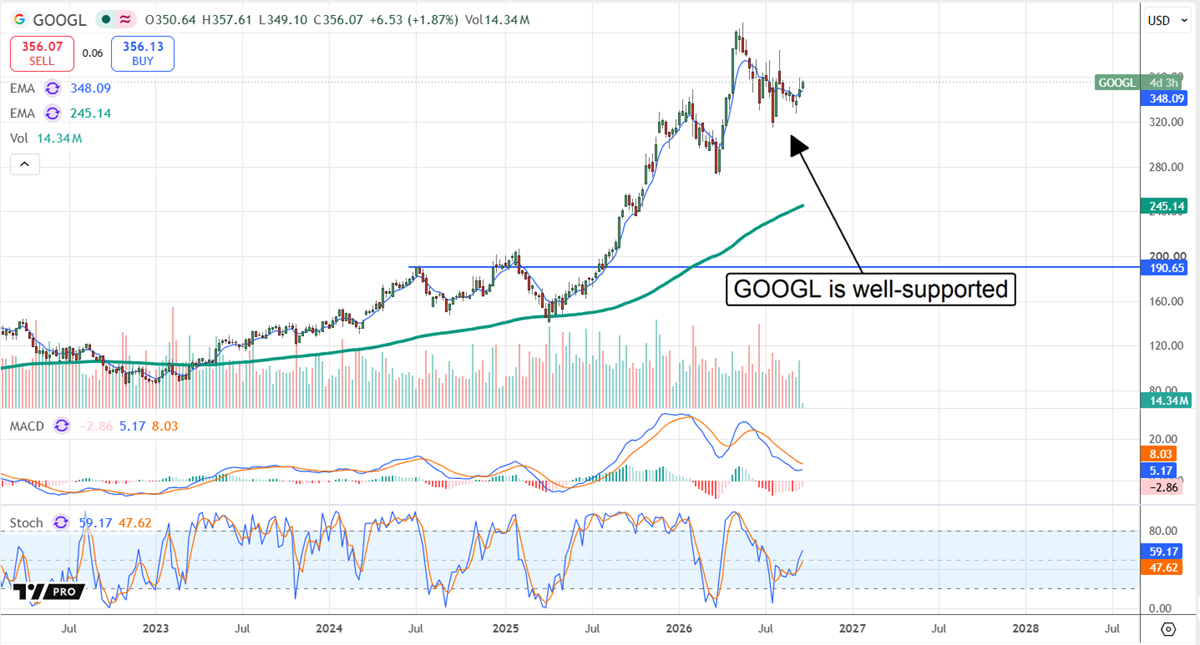
Palantir Monetizes AI SafetyPalantir (NASDAQ: PLTR) monetizes AI in several ways, but first and foremost as an orchestration layer that allows businesses and governments to access AI safely. Its moat lies in compliance and its Ontology, the data layer beneath its AIP platform. Ontology helps keep data safe and secure while creating clear, easy-to-follow roadmaps for AI deployment. Its products not only make AI safer but also make it more useful, which drives broader adoption. Catalysts in 2026 include accelerating revenue growth and profitability. Palantir is returning capital, but at a slower pace, choosing to offset share-based compensation while preserving capital for growth initiatives. The company has an aggressive go-to-market strategy focused on onboarding clients and developing solutions before they commit, but it works, translating into long-term contracts and rapidly improving revenue visibility. Analyst trends reflect these strengths, with coverage increasing, sentiment firming and price targets trending higher. The consensus price target forecasts only modest upside, but the trend matters, with the high-end price target implying fresh all-time highs. Institutions are buying, helping underpin the stock’s price action. 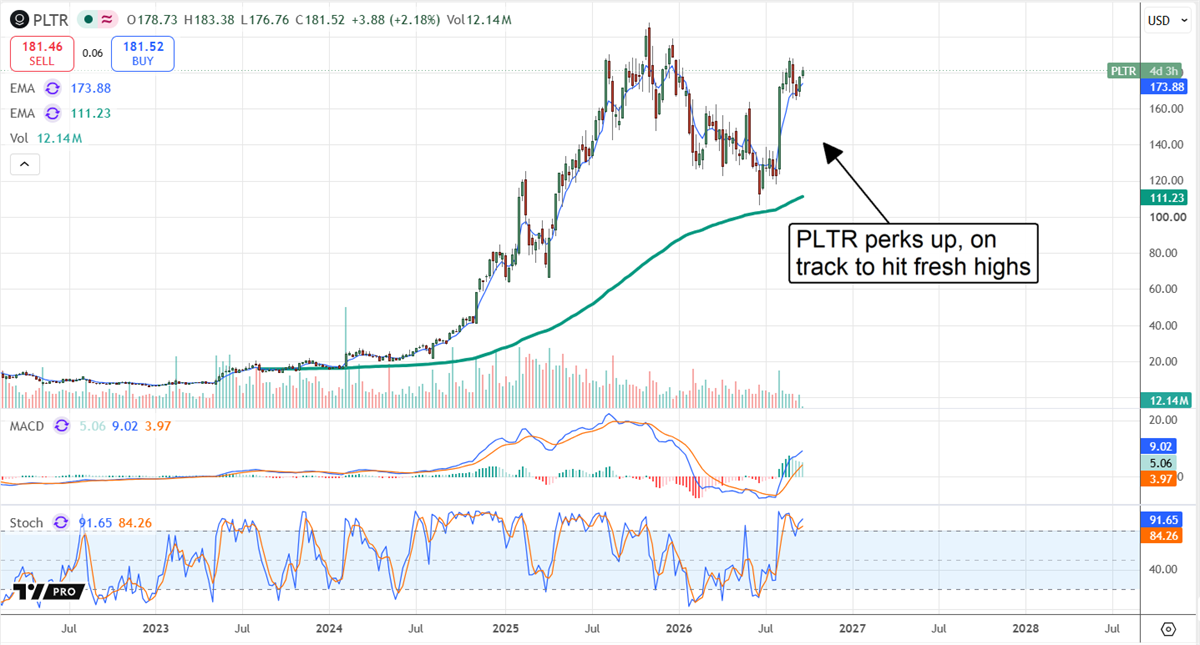
. |


No comments:
Post a Comment